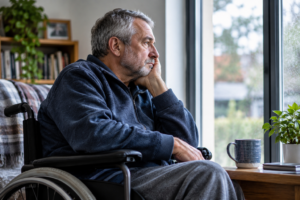
The process of bereavement for the loss of a loved one can create a real sense of isolation, loneliness and a feeling of being adrift for those left behind with their very personal grief and loss. People with a disability experiencing grief and loss can often experience an enhanced sense of acute isolation and loneliness. Losing a key carer, friend, or family member can abruptly shrink daily connection and autonomy, while acute changes in routine, withdrawal, agitation, sleep shifts, or mood changes may be misread simply as “behavioural issues” or regression and only enhance the feeling of isolation.
Research clearly suggests that following the loss of a loved one, we all experience significant emotional changes, which can be more acutely experienced by people with a disability. How we each experience grief and loss can vary, and no one person’s experience is the same. For people with a disability, this can often manifest itself in a cycle of changes to physical and mental abilities, identity, and life plans, which often enhance a sense of isolation and loneliness. They rarely follow a predictable or step-by-step timeline. These responses can impact primary grief (the loss of functions, mobility, or bodily functions) to secondary grief (the impact of the loss on jobs, education, and independence in society). Strong feelings of sadness, anger, loss, isolation, and loneliness can come and go, in varying degrees of acuteness. For people with a disability, the uncertainty triggered by the loss of a loved one can often result in more severe responses, as the anchors in their lives are suddenly removed, and the process of reorientation impacts not only internal feelings but also how the person relates to their immediate world, relationships and social network. A sense of isolation from a familiar world is made all the sharper. These feelings can often be accentuated by the systemic social barriers the disability community often faces when society is ill-prepared to accommodate disability in mainstream health care, which only magnifies the personal sense of isolation.
The key to improving how the disability community responds to grief and loss is for society to continuously address social barriers to isolation, to include the disability community in the complete bereavement process and to tackle approaches which disempower or disenfranchise those with a disability from naturally expressing their grief and loss in a community that respects and accommodates them. Encouraging reaching out to fellow community members can promote learning from others and acceptance of the grieving state. This is something not only for governments and civic leaders to address but something we can all play a role in, as empathy, understanding, and a positive sense of regard can add much to alleviating the grieving process in the disability community.